CWL · tip 1.0.26 · public
Chrysalis Web Language — the genome Convert and Secure consume.
Chrysalis Web Language describes what a web app is: routes, handlers, pages, data, UI, effects — and honest holes when a claim is unsafe. Convert and Secure consume it — they do not redefine it.
- 01 Surface in routes, pages, effects
- 02 Readable genome CWL + honest holes
- 03 Consumed Convert & Secure
How CWL works
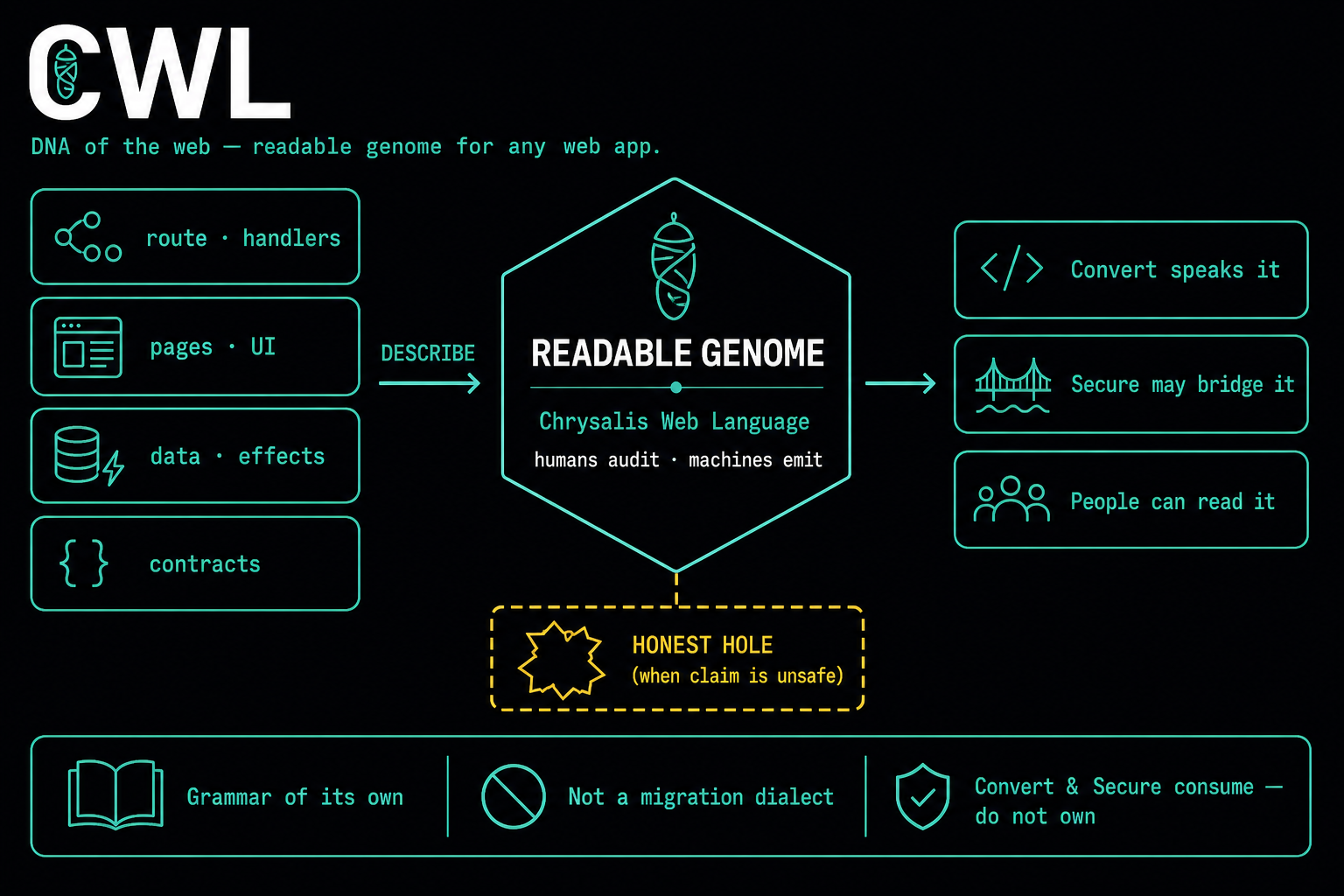
Describe once. Audit the holes. Let others speak it.
Surface in
Routes, handlers, pages, data, UI, and effects enter one readable model — not a one-off dialect for a single migration.
Readable genome
Humans can audit what the app claims to be. Machines can emit from the same model. Missing truth stays a labeled hole.
Consumed, not owned
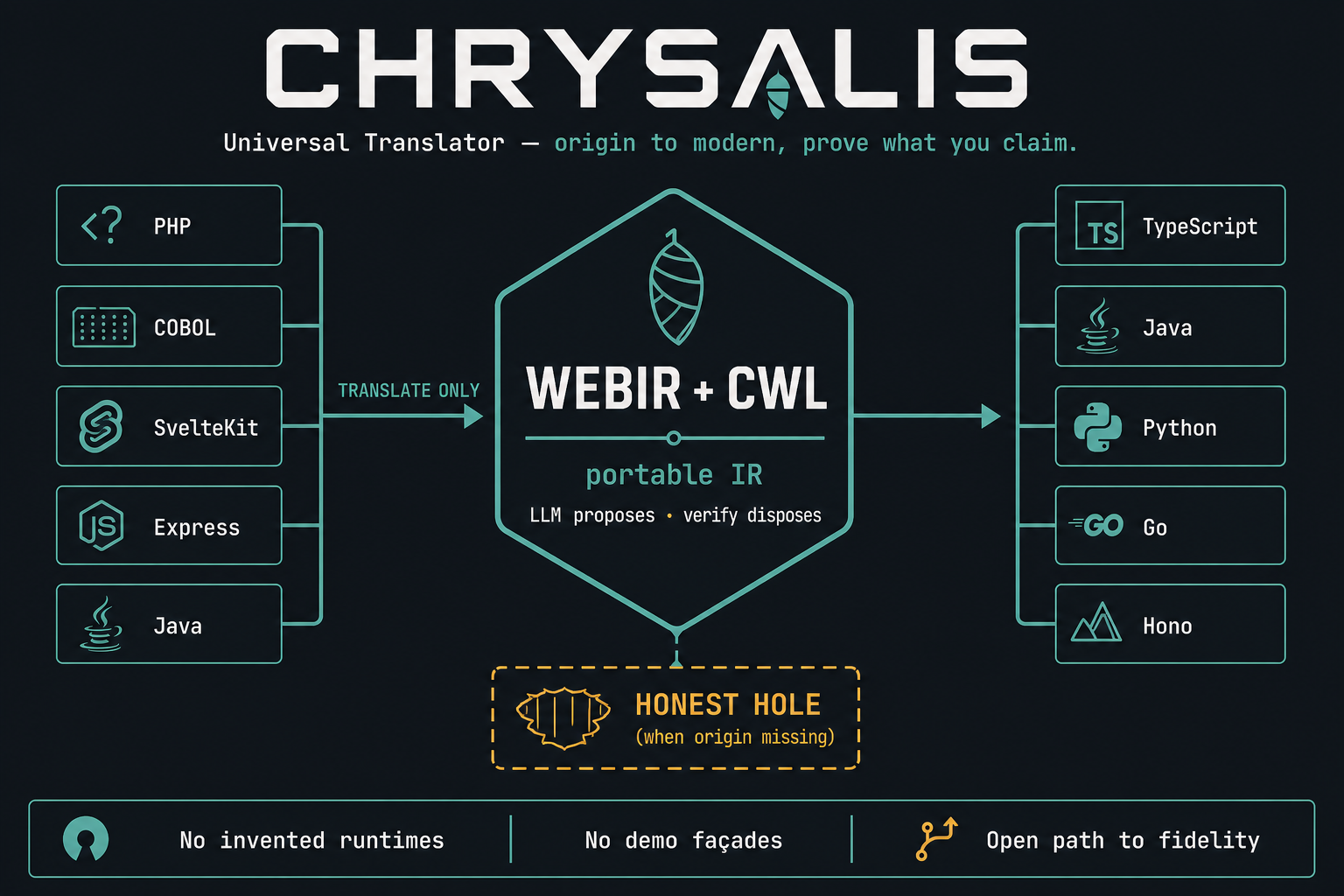
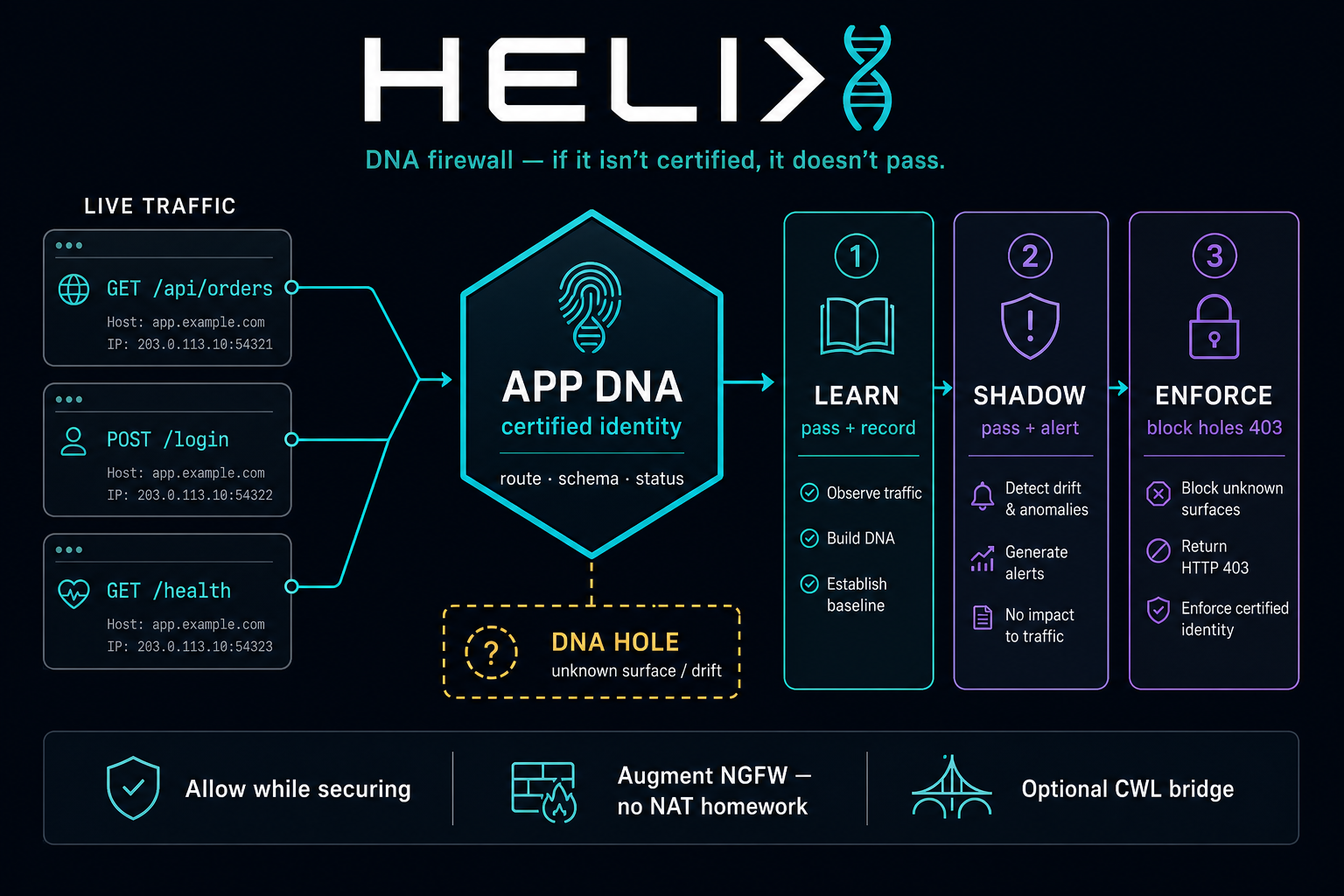
Convert translates through CWL. Secure’s default is traffic DNA; any CWL bridge must match this grammar — no fork inside Helix.
Grammar of its own. Not a migration dialect. Convert & Secure consume — do not redefine.
Surfaces (tip 1.0.26)
| Surface | Status |
|---|---|
API @route | Shipped — RFC-0001–0008 |
Pages @page | Shipped — RFC-0010/0011/0014 |
Data load | Partial — RFC-0013 |
| UI islands | Language shipped — RFC-0017–0019, 0024, 0028 |
| Effects | Declarative — RFC-0007, 0020 |
| DNA bridge | Contract — RFC-0022 (app-dna-v1) |
Gates
npm run smoke:ut-spine→UT_SPINE_OK(CWL owns this spine)npm run smoke:cwl-ingest-matrix→CWL_INGEST_MATRIX_OK- WebSocket and similar residuals stay typed holes — never silent stubs
Full paper: CWL language · WebIR · Docs index
Open source
All three pillars are public on GitHub. Tip language 1.0.26.
Sister pillars